

Meet data residency requirements for global and local data.
Data residency
Easily meet international data storage requirements
Increasingly international regulations and/or customers require that data generated by citizens of a country or region are stored only in that country or region. With pgEdge you can control which tables are globally replicated, and which stay local. In addition you can implement geographic sharding, or “geo-sharding”, where tables are broken out based on a location field (like “country”). This shares global data globally, while keeping local data local where necessary.
For example, an e-commerce company might globally replicate product catalog data, while keeping customer information and the order data they generate within a geographic region like Europe or the United States.
Get started today for free
Build agentic AI apps for Postgres
MCP Server for AI assistant integration,
RAG pipeline with Document Loader, Vectorizer, and RAG Server,
Essential AI extensions
Deploy Postgres on Kubernetes
Single command deploy with pgEdge Helm chart
Works seamlessly with CloudNativePG
Optional local eval with Docker compose
Sign up for fully managed Cloud
Full provisioning, security and monitoring
Access via web dashboard, API, and IaC tools
Bring your own cloud account: AWS, Azure, GCP
Build on prem: VM or bare metal
Simple database operations with Control Plane
Flexible deployment to single or muti-region with zero downtime add nodes
Production ready with same day security updates

Learn more from the community
Sign up to receive the latest news from technical blogs to Postgres live sessions with Postgres community experts.
Dive deeper into pgEdge

Postgres Live: Monthly Series Scaling PostgreSQL: Vertical, Horizontal, and High Availability Strategies
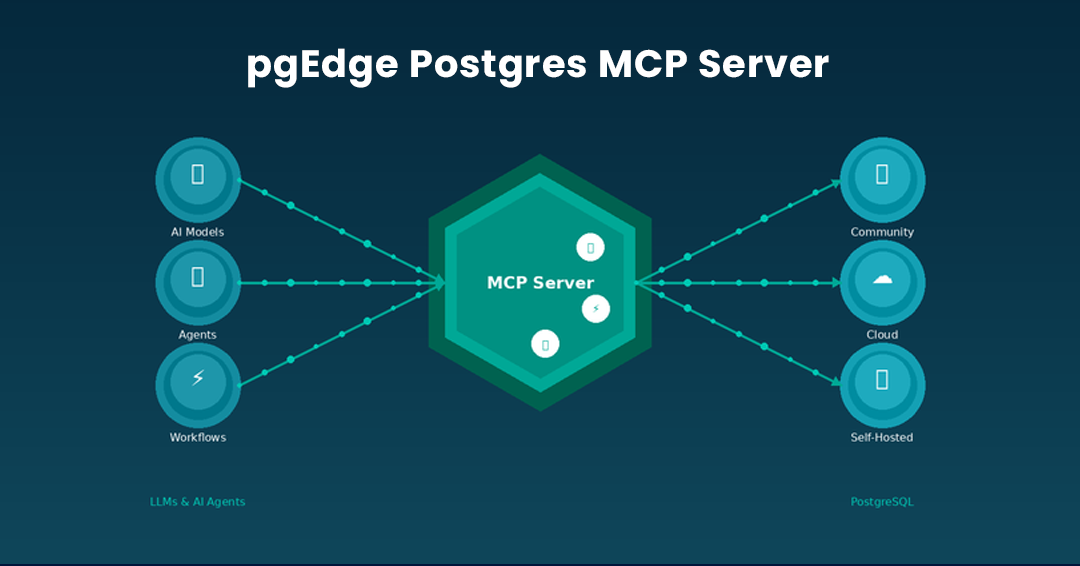
Introducing The pgEdge Postgres MCP Server - And How to Connect it to Claude Code and Cursor

Get started today.
Experience the magic of pgEdge for non-distributed and distributed Postgres deployments.