pgEdge ColdFront · Postgres tiered storage

Unify AI, Analytical and transactional workloads. Save heaps on storage.

Keep active data in Postgres and move older data to Apache Iceberg object storage. Query and update it all through the same SQL and same set of table names. All without any code changes or vendor lock-in.

Up to 90%

lower storage cost for cold data

Up to 22x

faster analytical queries on cold Parquet data

Fully writable

hot and cold tiers

0

application changes

One Postgres interface for transactional, analytical, and AI workloads.

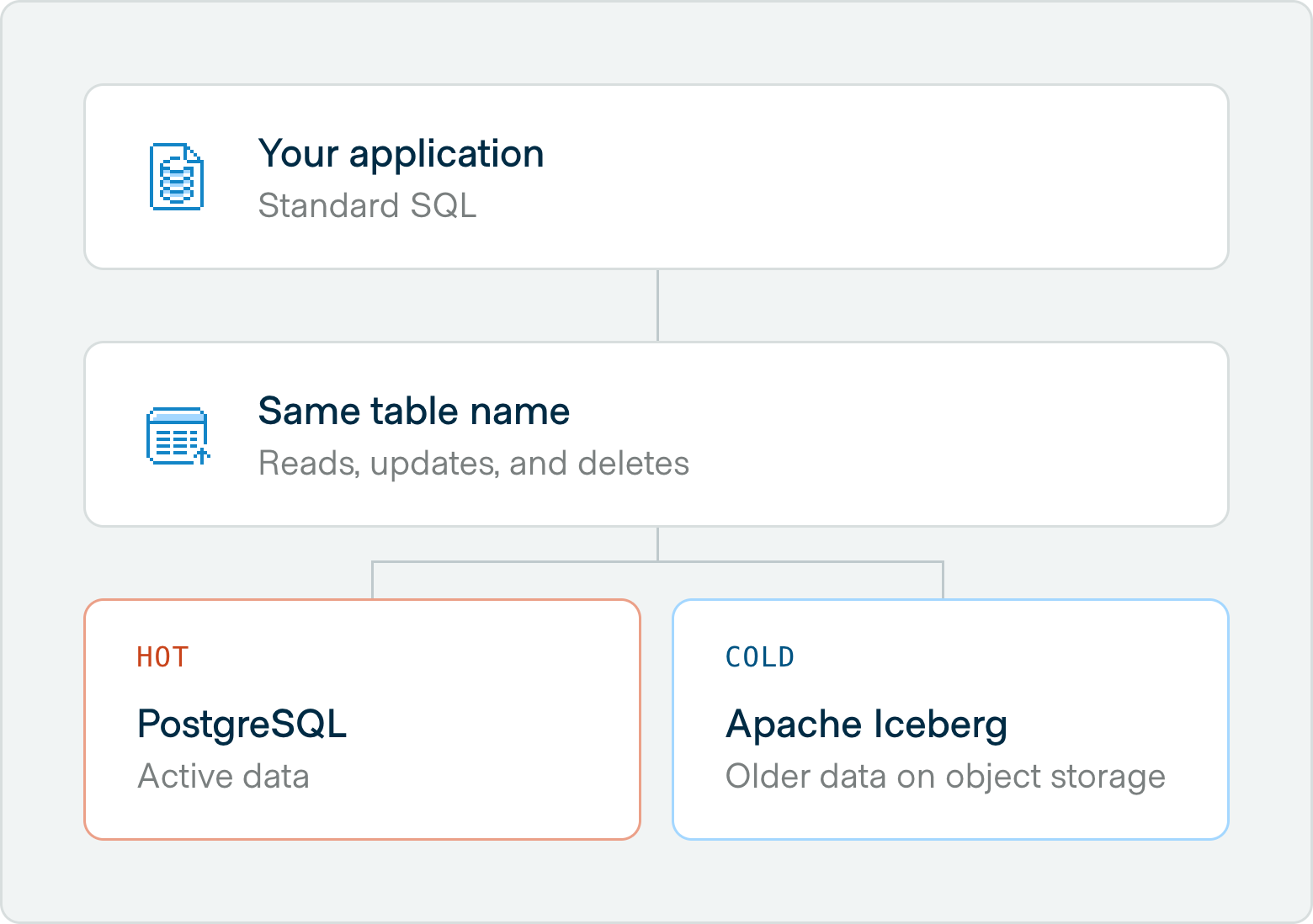
ColdFront keeps active data in Postgres and moves older data to lower-cost Apache Iceberg storage. Applications query and update everything through the same table and standard SQL—without a separate warehouse, ETL pipeline, or read-only archive.

coldfront-one-table-diagram

Your data changes temperature. Your application doesn’t have to change.

Writable dataset

Keep the entire dataset writable

Update or delete historical data through the same table name—even after it moves to cold storage. A GDPR deletion request or data correction stays one SQL statement instead of becoming a restore, modify, re-archive, and re-verify project.

Speed

Run analytics at columnar speed

DuckDB runs inside the PostgreSQL process and scans cold Parquet data with a vectorized columnar engine. There is no separate analytical service, sidecar, or data-copy pipeline to manage.

Postgres

Use standard Postgres

ColdFront runs on stock PostgreSQL 16, 17, and 18. Keep your existing drivers, SQL, applications, tools, and operational practices.

Cloud

Keep your data open and portable

Cold data is stored as Apache Iceberg and Parquet on S3-compatible object storage, Azure Blob Storage, or Google Cloud Storage. Any Iceberg-capable engine can read it without ColdFront in the path.

Cold data

Write to cold data across regions

In a pgEdge Spock mesh, multiple nodes can write to shared Iceberg tables while ColdFront coordinates commits across the distributed environment.

Lightweight

Keep operations lightweight

ColdFront runs DuckDB in-process and uses a small, composable set of open components—without a separate compute cluster or sidecar fleet.

Give AI agents access to the full history—not just the expensive part.

AI agents and ML pipelines need historical context, but keeping every record on SSD-backed PostgreSQL quickly becomes expensive. ColdFront keeps the full dataset queryable through Postgres while placing older data on lower-cost object storage. In decoupled mode, PostgreSQL becomes a stateless compute layer over Iceberg, so teams can query large histories with standard SQL and scale compute independently.

Built for data with a busy present and a long history.

ColdFront fits applications with fast-growing Postgres tables, frequently accessed recent data, and historical data that must remain available.

Time-series data

Event, telemetry, and time-series data

Keep the latest events fast for dashboards and alerts while moving older history to lower-cost object storage for reporting and trend analysis.

Standard SQL

Compliance and long-term retention

Retain years of queryable data in an open format that remains accessible beyond any individual vendor relationship.

Delete correction

Right-to-delete and historical corrections

Apply GDPR, CCPA, and data-quality changes directly to archived records without rehydrating entire datasets.

Global scalability

Multi-region applications

Replicate the active working set with pgEdge Spock while making the full Iceberg history available to Postgres nodes across regions.

Connect AI tools

AI and machine learning

Give agents and ML pipelines SQL access to the complete data history while keeping storage and compute independently scalable.

Analytics

Analytics without a separate warehouse

Run aggregations and analytical queries across operational history without building and operating a separate CDC or ETL pipeline.

Three modes. One SQL interface.

Choose the storage model per table. All three modes can coexist in the same database.

coldfront-mode-tiered

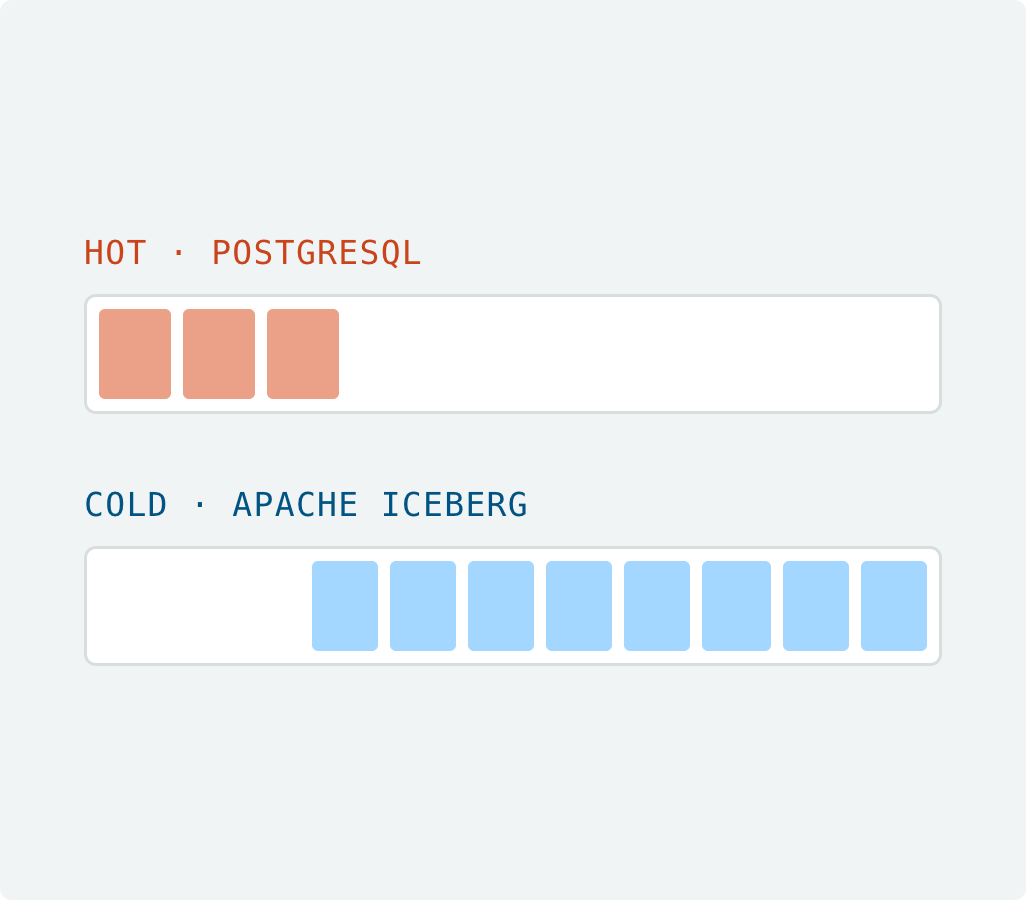
Tiered: hot Postgres + cold Iceberg

Keep recent partitions in native PostgreSQL for full OLTP performance. ColdFront moves older partitions to Iceberg on a configurable schedule and can expire data after its retention window.

coldfront-mode-decoupled

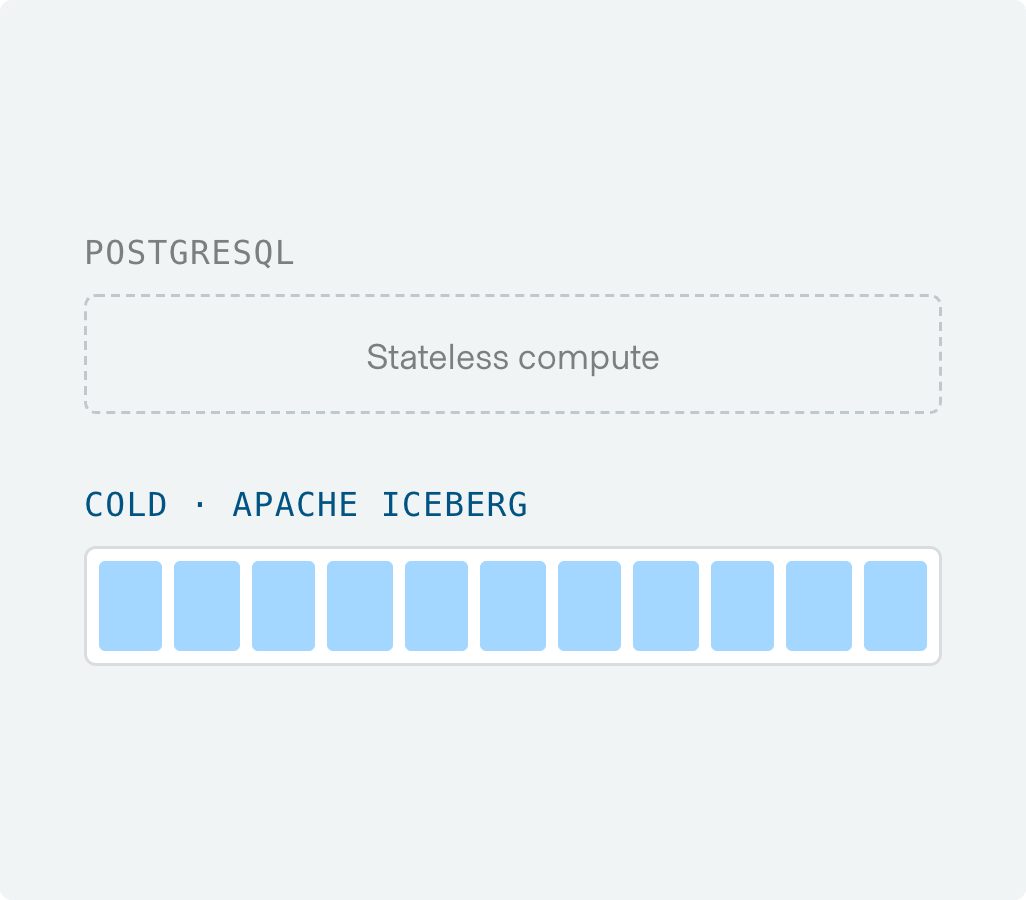
Decoupled: Iceberg-only

Store the full table in Iceberg from the first row and use PostgreSQL as a stateless SQL compute layer. Scale compute independently against the same catalog and object storage without duplicating the dataset.

coldfront-mode-partition-only

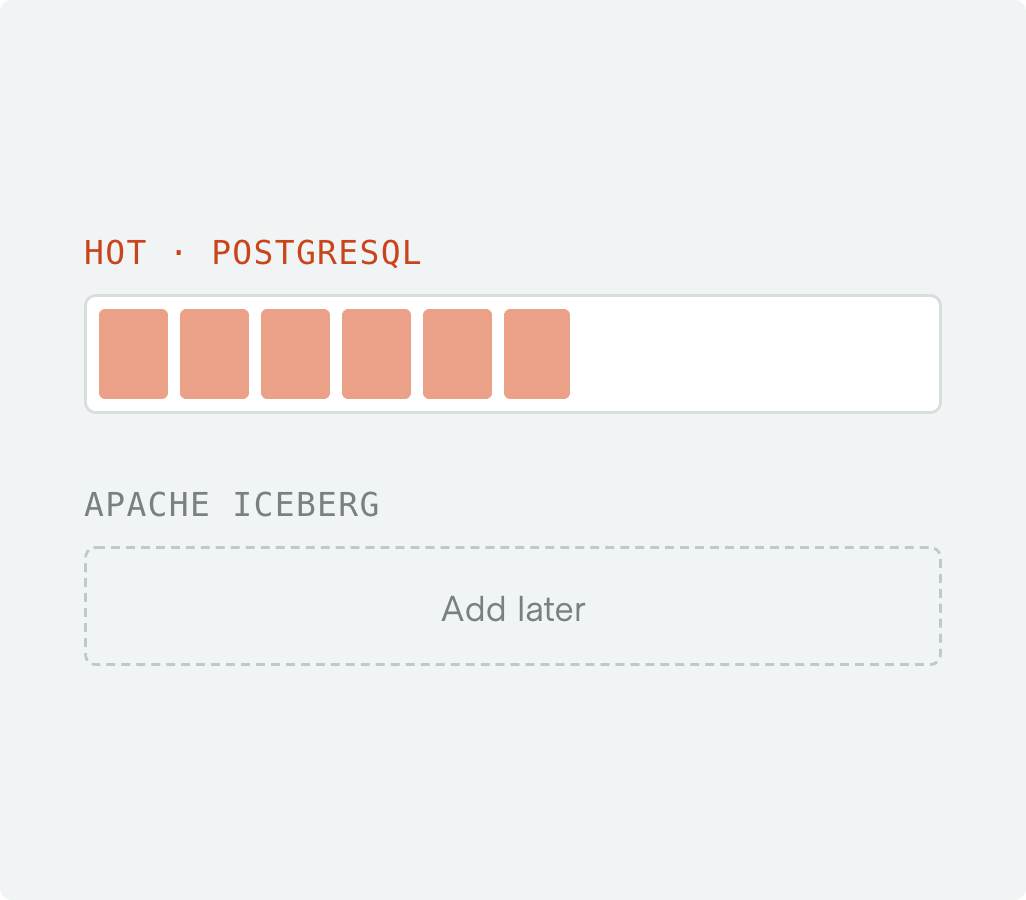
Partition-only

Automate partition creation and retirement on stock PostgreSQL without Iceberg. Add tiering later when the workload requires it.

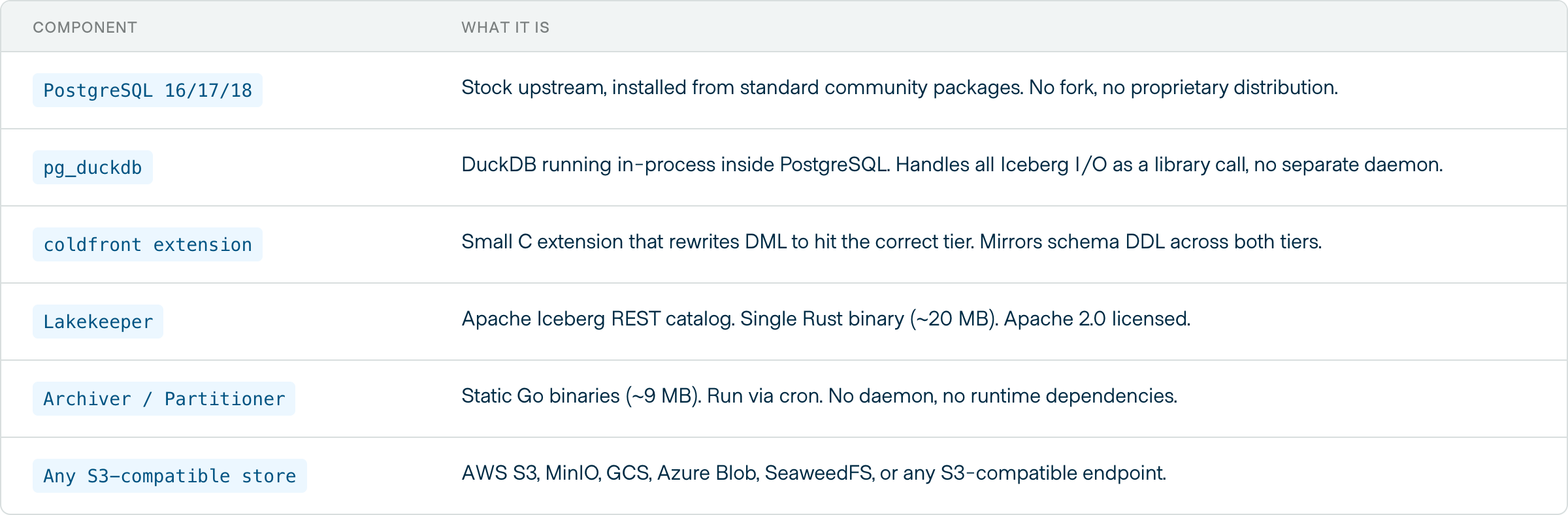
Open at every layer.

ColdFront is built on standard, composable infrastructure so your data remains accessible with or without pgEdge.

coldfront-components-table

Start open source. Add enterprise support when you need it.

ColdFront community

ColdFront Community

  • Open source ColdFront extension and archiver
  • Tiered, decoupled, and partition-only modes
  • Standard Apache Iceberg cold storage
  • Single-node deployment
  • Community support through GitHub
Retention

pgEdge Enterprise Postgres + ColdFront

  • Tested, packaged binaries
  • Distributed cold writes with pgEdge Spock
  • Automated cross-node configuration
  • Architecture, high availability, backup, and retention guidance
  • AI DBA Workbench for monitoring and management
  • SOC 2 Type II controls and software bills of materials
  • 24x7x365 support from pgEdge Postgres experts

Frequently asked questions

What is Postgres tiered storage?

Postgres tiered storage keeps frequently accessed data in native PostgreSQL while moving older or less frequently accessed data to lower-cost object storage. ColdFront presents both tiers through the same Postgres table name and SQL interface.

Does my application need to know where data is stored?

No. Your application continues to query and modify the same table with standard Postgres SQL. ColdFront handles whether each row lives in native PostgreSQL or Apache Iceberg.

Is cold data read-only?

No. ColdFront’s cold tier supports reads, updates, and deletes through the same table name. Historical corrections and right-to-delete requests do not require restoring the data to the hot tier first.

Does ColdFront require a PostgreSQL fork?

No. ColdFront runs on stock PostgreSQL 16, 17, and 18.

Where is cold data stored?

Cold data is stored in Apache Iceberg and Parquet on S3-compatible object storage, Azure Blob Storage, or Google Cloud Storage.

Can other tools access the cold data?

Yes. Because cold data uses standard Apache Iceberg and Parquet, it remains readable by Iceberg-compatible tools and engines without ColdFront in the query path.

How does ColdFront support AI workloads?

ColdFront keeps the complete data history accessible through standard Postgres SQL while lowering the cost of storing older data. In decoupled mode, PostgreSQL can act as a stateless compute layer over Iceberg, allowing AI and ML workloads to query large histories without duplicating the dataset into a separate system.

Is ColdFront open source?

Yes. ColdFront’s core extension and archiver are open source. An enterprise subscription adds tested packages, distributed capabilities, operational tooling, and 24x7x365 support.

Keep every row available without paying hot-storage prices for all of it.

Try ColdFront from GitHub, read the technical documentation, or talk with a Postgres expert about tiering your production data.

CTA section bg